NOVEMBER SOLD OUT • SHIPS DEC 12–18
Rise Nightlight
ACTIVE VS. PASSIVE CHECK-INS Daily Check-Ins • Updated 2026-11-13 • 5 min read

Active vs. Passive Daily Check-In Systems for Aging Parents: Why Passive Systems Last

Active systems ask an 80-year-old to tap an app, answer an automated phone call, or charge a watch every night. Passive systems ask nothing and keep working long after daily routines slip.

QUICK ANSWER / TL;DR

Active daily check-ins like pendants, smartwatches, tap-in apps, and automated press-1 calls often fail within 60 to 90 days when a parent forgets to charge, wear, or answer on schedule. Rise Nightlight ($0 upfront, $12/mo annual, $6 shipping) senses their normal morning hallway walk over built-in cellular and texts your phone.

Side-by-side comparison

Active Compliance Check-Ins vs. Passive Hallway Check-Ins (2026)

Side-by-side comparison of daily parent tasks, false-alarm causes, Wi-Fi requirements, and 3-year out-of-pocket totals.

Check-In Type Daily Action From Parent Primary False-Alarm Cause 3-Year Cost
Rise Nightlight (Passive Cellular) Best for zero parent friction
Zero. Walks down hallway or into kitchen as usual None from batteries, chargers, ringers, or Wi-Fi routers $438 ($0 upfront, $12/mo annual + $6 shipping)
Check-In Smartphone Apps (Snug Safety)
Unlock phone and tap check-in button before daily deadline Dead phone battery, muted ringer, or sleeping in 20 minutes $0 (Free) or ~$450–$720 (Dispatch tier)
Automated Phone Calls (Iamfine, SeniorCall)
Hear phone ring at fixed time, pick up, and press 1 In shower, out in yard, spam-call fatigue, or ringer off ~$300–$540 (+ parent phone service)
Smartwatches (Apple Watch SE Cellular)
Dock on magnetic puck daily and put back on wrist each morning Left on nightstand charger during early bathroom or kitchen walk $609–$789 ($249 watch + $10–$15/mo cellular)
Wearable SOS Pendants (Life Alert, Medical Guardian)
Wear neck lanyard or wristband 24/7 and press if needed Left on nightstand or bathroom hook out of discomfort $1,260–$3,437+ (up to 36-mo contracts)
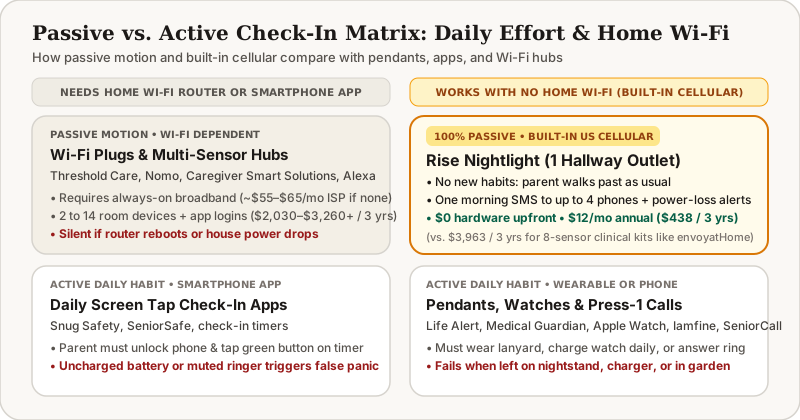
Four-quadrant matrix comparing active check-in apps and pendants against Wi-Fi sensor hubs and Rise Nightlight passive cellular hallway check-ins.
Rise combines passive daily check-ins (no buttons, charging, or wearables) with built-in US cellular (no home Wi-Fi) in a single hallway outlet.
HONEST FIT CHECK

When an Active Check-In System Fits Better

Active systems beat a passive hallway light when your parent wants two-way voice contact or mobile coverage away from home:

Fall history requiring 24/7 SOS voice dispatch

If your parent has fallen recently and commits to wearing a cellular pendant every day, an active SOS button reaches live dispatchers anywhere in the house or yard.

Smartphone-savvy parent who never misses notifications

If your parent uses an iPhone all day, charges it nightly, and likes tapping Snug Safety's free morning button, $0/mo beats adding hardware.

Parent who enjoys a scheduled morning phone ring

Some older adults living alone welcome a daily county reassurance call or SeniorCall prompt that anchors their morning schedule.

WHY ACTIVE CHECK-INS ERODE

Why active check-ins break down after 60 to 90 days

In week one, almost every active check-in works. Mom remembers to tap her smartphone app at 8:30 AM, and Dad remembers to put on his pendant after breakfast. By month three, ordinary mornings get in the way: a poor night of sleep means sleeping past the app chime, a bumped volume switch mutes the ringer, or the watch stays on its charger.

Every missed deadline sets off a family phone tree or sends a neighbor knocking on the front door while your parent is making breakfast. After two false alarms, most independent parents ask to shut the system off. Compare how active and passive systems stack up on our Passive Check-In Sensor overview.

  • Clock-in fatigue: Tapping an app button on a daily timer makes independent adults feel like they are reporting attendance to their kids.
  • Shower and yard blind spots: Fixed-time phone calls fail whenever your parent is in the shower or out on the porch at 9:00 AM.
  • Daily charging chores: Daily watch or phone charging is the first habit to slip during a cold, poor sleep, or busy week.

ZERO COMPLIANCE BY DESIGN

How a plug-in hallway nightlight removes daily tasks for your parent

A passive check-in relies on a habit your parent already has: getting out of bed and walking toward the bathroom or kitchen. Rise Nightlight puts a motion and light sensor plus built-in US cellular inside a warm 3000K plug-in hallway nightlight.

At night, it lights dark hallways for bathroom trips without sending 2:00 AM alerts. Once their morning window opens, their first walk past the outlet sends one SMS check-in to up to 4 family phone numbers. It needs no home internet, router passwords, or app logins, as detailed in our No-Wi-Fi cellular setup guide.

TEST YOUR PARENT'S FIT IN 60 SECONDS

Unsure whether active SOS, free calls, or passive hallway check-ins fit?

Take our 5-question Parent Check-In Fit Quiz to see when Rise fits and when a wearable SOS pendant or free county call is the better choice.

STRAIGHTFORWARD PRICING

$0 hardware upfront and prorated refunds if care needs change

Rise Nightlight ($99 value) is $0 upfront on a 12-month cellular plan at $12/mo billed annually ($144/yr) or $15/mo monthly, and you own the nightlight after 12 months. Pay $6 USPS Ground shipping today for the December Batch (ships Dec 12–18 from Minnesota). Plan billing starts only when you plug it into the wall.

Check your setup in our 5-question Parent Check-In Fit Quiz or read our 30-day trial and life-change guarantee. If your parent moves in with family, enters assisted living, or passes away, monthly billing stops immediately and unused annual months are refunded on a prorated basis.

Zach, Founder and Engineer of Rise Nightlight in Minnesota
Written & engineered by Zach in Minnesota, USA

I built Rise so my family could know our aging parents were up each morning without indoor cameras, home Wi-Fi, or medical pendants. Every unit is assembled and pre-linked in Minnesota before shipping. About Zach & Rise • 30-day trial & life-change guarantee • See 60-second setup • Ask Zach directly

30-DAY HOME TRIAL • LIFE-CHANGE REFUND GUARANTEE

Know your parent is up each morning without changing their routine.

Rise ($99 value) is $0 upfront on a 12-month cellular plan: $12/mo billed annually ($144/yr) or $15/mo monthly, and you own the nightlight after 12 months. Pay $6 USPS Ground shipping today for the December Batch (ships Dec 12–18 from Minnesota). Billing starts only when plugged in.

Common questions

Frequently Asked Questions

What is the difference between an active check-in and a passive check-in?

An active check-in requires your parent to do something every day, such as tapping an app, pressing 1 on an automated call, or charging and wearing a button. A passive check-in like Rise Nightlight requires zero daily action; walking past their hallway or kitchen outlet confirms they are up.

What happens if my parent sleeps in past their normal wake-up time?

You set a multi-hour morning window (for example, 6:00 AM to 10:30 AM) and can widen it anytime by replying to the Rise SMS thread or tapping your passwordless settings link. If no motion is detected by the end of the window, Rise texts your family a late-routine alert.

Can we pause passive check-ins when my parent travels or visits for the holidays?

Yes. Text AWAY until Sunday in your Rise SMS thread or use your 1-tap passwordless settings link, and morning check-ins pause until they return home.

Does Rise work alongside a wearable fall button if we want both?

Yes. Many families pair a no-contract cellular SOS pendant for daytime falls with Rise Nightlight as an automatic morning check-in for the days the pendant stays on the dresser.

Keep comparing

Related Caregiver Guides

View all guides ->